

Written by Dr. Avani Reddy, MBBS, MS OBG
Updated 2025-07-01
Common symptoms - when to see a specialist
- Severe or sudden headache in pregnancy (preeclampsia warning sign)
- Visual disturbances - blurring, flashing lights in pregnancy
- Sudden swelling of face, hands, or feet
- Upper abdominal pain, particularly below the ribs on the right side
- Baby moving less than usual after 28 weeks
- Vaginal bleeding at any point in pregnancy
- Contractions before 37 weeks (possible preterm labour)
- Fluid leaking from the vagina (possible membrane rupture)
- Severe nausea and vomiting causing inability to keep fluids down
What Makes a Pregnancy High-Risk?
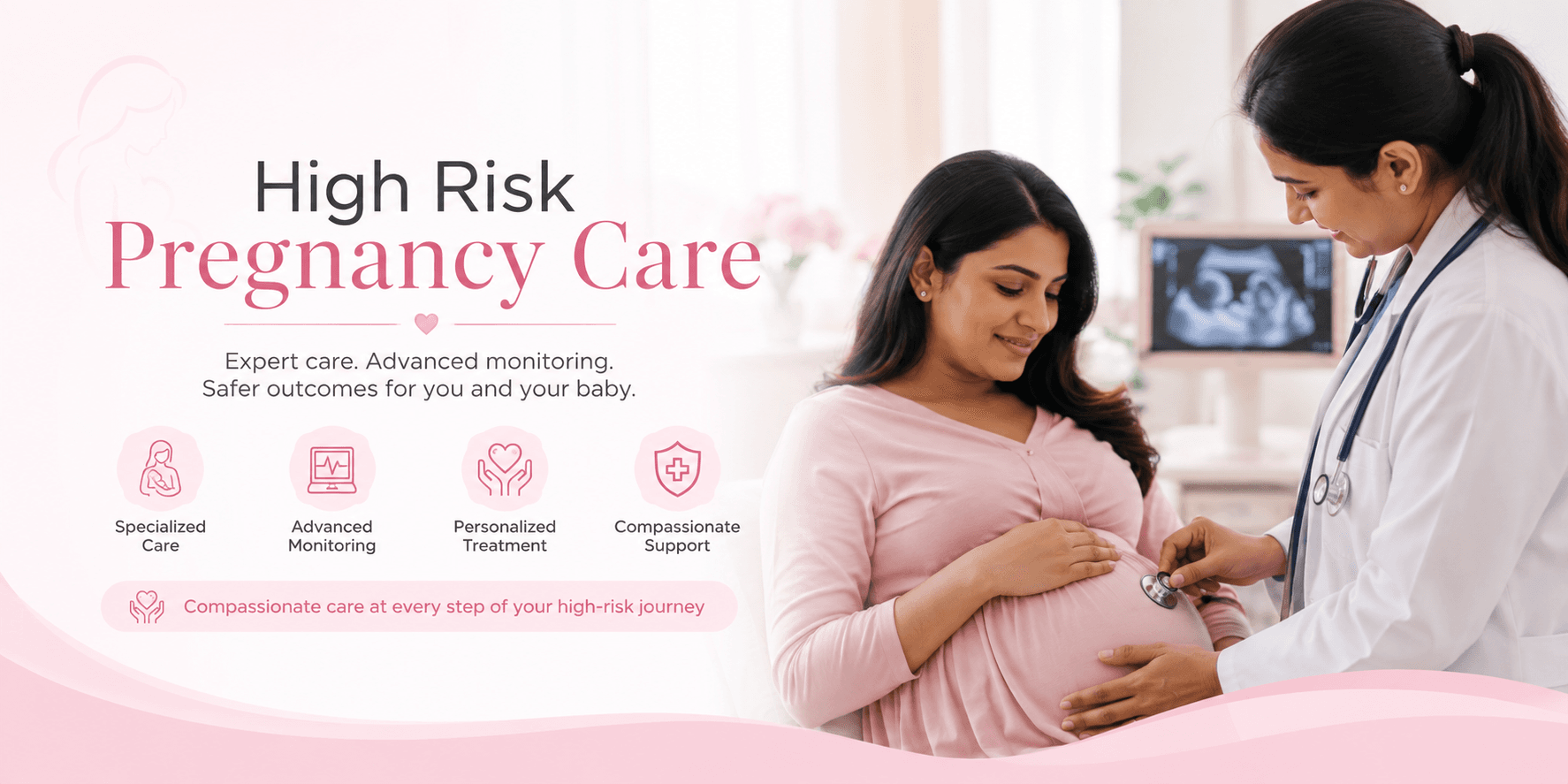
A pregnancy is classified as high-risk when there are maternal or fetal factors that increase the probability of complications during pregnancy, labour, or after delivery. High-risk does not mean the pregnancy will definitely have complications - it means closer monitoring and specialist care are needed to achieve the best outcome for both mother and baby. Dr. Avani Reddy provides high-risk obstetric care at her locations in Kokapet and Gachibowli, serving women across Hyderabad.
- Advanced maternal age (35 years or older at the time of delivery)
- Carrying twins, triplets, or higher-order multiples
- Previous pregnancy complications - preeclampsia, preterm birth, recurrent miscarriage, placenta praevia
- Pre-existing medical conditions - diabetes, hypertension, thyroid disorders, kidney disease, autoimmune conditions, cardiac conditions
- Gestational diabetes diagnosed during pregnancy
- Pregnancy-induced hypertension or preeclampsia
- Fetal growth restriction (baby measuring small for gestational age)
- Placenta praevia (placenta covering the cervix) or placenta accreta
- Short cervix with risk of premature birth
- Pregnancy after IVF or other assisted reproduction
- Preterm labour (contractions before 37 weeks)
- Obesity (BMI over 30 before pregnancy)
High-Risk Pregnancy Monitoring in Hyderabad
Women with high-risk pregnancies require more frequent antenatal visits and additional investigations compared to routine obstetric care. The monitoring plan is tailored to the specific risk factors. Dr. Avani Reddy designs individualised care plans for high-risk patients at Kokapet and Gachibowli, incorporating specialist scans, growth monitoring, blood pressure assessment, and blood tests throughout pregnancy.
- Early dating ultrasound and viability scan in the first trimester
- Combined first-trimester screening (nuchal translucency + blood test) for chromosomal abnormalities
- Anomaly scan at 18–20 weeks with detailed fetal anatomy survey
- Growth scans every 4 weeks from 28 weeks (or more frequently for fetal growth restriction)
- Doppler studies (blood flow measurements) for fetal wellbeing assessment
- Cervical length measurement for women at risk of preterm birth
- Regular blood pressure monitoring with urine protein testing for preeclampsia surveillance
- Fasting blood glucose and HbA1c for gestational diabetes management
- Cardiotocography (CTG) for fetal heart rate monitoring in the third trimester
Gestational Diabetes Management in Hyderabad
Gestational diabetes mellitus (GDM) is one of the most common complications of pregnancy - affecting approximately 1 in 4 pregnant women in India. It is diagnosed with an oral glucose tolerance test (OGTT) at 24–28 weeks of pregnancy. Left unmanaged, gestational diabetes can cause the baby to grow too large (macrosomia), increase the risk of a difficult delivery, and raise the risk of the baby developing low blood sugar after birth. Dr. Avani Reddy manages gestational diabetes in Hyderabad with dietary modification, blood glucose monitoring, and insulin therapy when required - adjusted throughout pregnancy as glucose targets change.
Preeclampsia Surveillance and Management
Preeclampsia is a pregnancy complication characterised by high blood pressure and protein in the urine, typically developing after 20 weeks of pregnancy. Severe preeclampsia can progress rapidly to serious complications including seizures (eclampsia), liver and kidney damage, and haemorrhage. Women with preeclampsia require careful monitoring and, when the condition is severe or the pregnancy is near term, delivery is the definitive treatment. Dr. Avani Reddy screens all her high-risk patients in Hyderabad for preeclampsia throughout pregnancy and has protocols for urgent escalation when warning signs appear.
Twin and Multiple Pregnancy Care in Hyderabad
Twin and multiple pregnancies carry significantly higher risks than singleton pregnancies - including preterm birth, twin-to-twin transfusion syndrome (TTTS) in identical twins, fetal growth restriction, gestational diabetes, preeclampsia, and the need for caesarean delivery. Dr. Avani Reddy provides specialist twin and multiple pregnancy care, with the increased monitoring frequency these pregnancies require. For complicated twin pregnancies, she coordinates with specialist maternal-fetal medicine units when needed.
Labour and Delivery Planning for High-Risk Pregnancies
Planning where and how a high-risk pregnancy will be delivered is an important part of antenatal care. Dr. Avani Reddy reviews each patient's specific risk factors to determine the safest mode and timing of delivery. Some high-risk conditions require early delivery, elective caesarean section, or delivery in a hospital with a neonatal intensive care unit (NICU). Detailed birth planning discussions happen at approximately 34–36 weeks - or earlier if the condition warrants it.
Why choose Dr. Avani Reddy in Hyderabad?
- Obstetrician, gynecologist & fertility doctor with 10+ years of experience
- Specialist obstetric experience in managing complex, high-risk pregnancies
- Individualised monitoring plans - tailored to each specific risk factor
- Both clinic locations equipped to manage routine and complex antenatal care
- Direct coordination with hospital facilities for delivery and emergency escalation
- Integrates fertility (IVF pregnancies) with specialist obstetric care
- Open seven days a week - including evenings - for monitoring scans and reviews
Frequently asked questions
What makes a pregnancy high-risk in India?+
A pregnancy is high-risk when maternal or fetal factors increase the chance of complications. Common causes in India include advanced maternal age (35+), gestational diabetes, hypertension, twin pregnancies, previous caesarean, obesity, thyroid disorders, and fetal growth restriction. Being labelled high-risk means more monitoring is needed - not that complications will definitely occur.
Who is the best high-risk pregnancy doctor in Hyderabad?+
Dr. Avani Reddy is an obstetrician and gynecologist in Hyderabad with 10+ years of experience who specialises in high-risk obstetric care including twin pregnancies, gestational diabetes, preeclampsia, and pregnancy after IVF. She consults at Kokapet (Jade Clinics) and Gachibowli (Ankura Hospital).
How often do I need to visit the doctor during a high-risk pregnancy?+
High-risk pregnancies typically require more frequent antenatal visits than standard care. Depending on the specific risk factors, visits may be fortnightly or even weekly in the third trimester. Additional monitoring scans - growth scans, Doppler studies, CTG - are scheduled based on clinical need.
Is it safe to have a normal delivery with a high-risk pregnancy?+
Many women with high-risk pregnancies can deliver vaginally with close monitoring. The decision depends on the specific risk factors, the position and size of the baby, cervical readiness, and the progression of labour. Some conditions - placenta praevia, breech presentation, severe growth restriction - require caesarean delivery. Dr. Avani Reddy reviews each case individually.
What are the warning signs of preeclampsia in pregnancy?+
Warning signs of preeclampsia include severe headache that does not respond to paracetamol, visual disturbances (blurring, flashing lights, seeing spots), severe upper abdominal pain (under the right ribs), sudden swelling of the face or hands, and feeling generally unwell. Any of these in pregnancy require immediate assessment - contact your obstetrician or go to the nearest emergency department.
Can I have a high-risk pregnancy after IVF?+
Pregnancies after IVF are considered higher risk, particularly if twins resulted from the treatment, or if the woman has PCOS, endometriosis, or other conditions that led to fertility treatment. Dr. Avani Reddy manages IVF pregnancies as high-risk obstetric cases with the additional monitoring these pregnancies require.
What is gestational diabetes and how is it managed?+
Gestational diabetes is high blood sugar that develops during pregnancy, typically diagnosed by an oral glucose tolerance test (OGTT) at 24–28 weeks. It is managed with a diabetic diet, regular blood glucose monitoring, and insulin therapy if blood sugars are not controlled by diet alone. It usually resolves after delivery but increases the long-term risk of type 2 diabetes in the mother.
Is twin pregnancy always high-risk?+
Yes. All twin pregnancies carry higher risks than singletons, including preterm birth, growth restriction, gestational diabetes, preeclampsia, and complications specific to identical twins (twin-to-twin transfusion syndrome). Twin pregnancies require more frequent monitoring and specialist obstetric care throughout, which Dr. Avani Reddy provides at her Hyderabad locations.
Where can I find a high-risk pregnancy specialist near Kokapet?+
Dr. Avani Reddy provides high-risk obstetric care at Jade Clinics, Kokapet, accessible from Financial District, Narsingi, Gandipet, Manikonda, and Puppalaguda. She also consults at Ankura Hospital, Gachibowli, for patients from Kondapur, Banjara Hills, and Hitech City. Appointments: 83095 78197.
At what blood pressure level is pregnancy hypertension dangerous?+
A blood pressure of 140/90 mmHg or higher on two readings taken at least 4 hours apart after 20 weeks of pregnancy is classified as gestational hypertension. Preeclampsia is diagnosed when hypertension is accompanied by protein in the urine or other organ involvement. Blood pressure of 160/110 mmHg or higher is a severe feature requiring immediate hospitalisation.
Where can I get high risk pregnancy specialist in Hyderabad?+
Dr. Avani Reddy is an obstetrician, gynecologist, and fertility doctor with 10+ years of experience (MBBS · MS OBG · Fellowship Reproductive Medicine · Diploma in ART), practising at Jade Clinics, Kokapet and Ankura Hospital, Gachibowli. Book at 83095 78197 or online via TDAppointments.
Is high risk pregnancy specialist available near Kokapet and Gachibowli?+
Yes. Consultations are available at Jade Clinics, Kokapet and Ankura Hospital, Gachibowli, with patients travelling from Financial District, Kondapur, Hitech City, Narsingi, Manikonda, and across Hyderabad.
Who is a good obstetrician gynecologist for high risk pregnancy specialist in Hyderabad?+
Dr. Avani Reddy is an obstetrician, gynecologist, and fertility doctor with 10+ years of experience (MBBS · MS OBG · Fellowship Reproductive Medicine · Diploma in ART), practising at Jade Clinics, Kokapet and Ankura Hospital, Gachibowli. She focuses on high risk pregnancy specialist with personalised plans and transparent next steps.
Related treatments
Serving all of Hyderabad
Dr. Avani Reddy provides high-risk pregnancy specialist in hyderabad for patients across Hyderabad - including Kokapet, Gachibowli, Financial District, Narsingi, Manikonda, Gandipet, Nanakramguda, Puppalaguda, Khajaguda, HiTech City, Kondapur, Madhapur, Banjara Hills, Jubilee Hills, Miyapur, Hitech City. Locations at Jade Clinics, Kokapet and Ankura Hospital, Gachibowli.
Last updated: July 2025. Written by Dr. Avani Reddy, MBBS, MS OBG - obstetrician, gynecologist and fertility doctor with 10+ years experience.