

Written by Dr. Avani Reddy, MBBS, MS OBG
Updated 2025-07-01
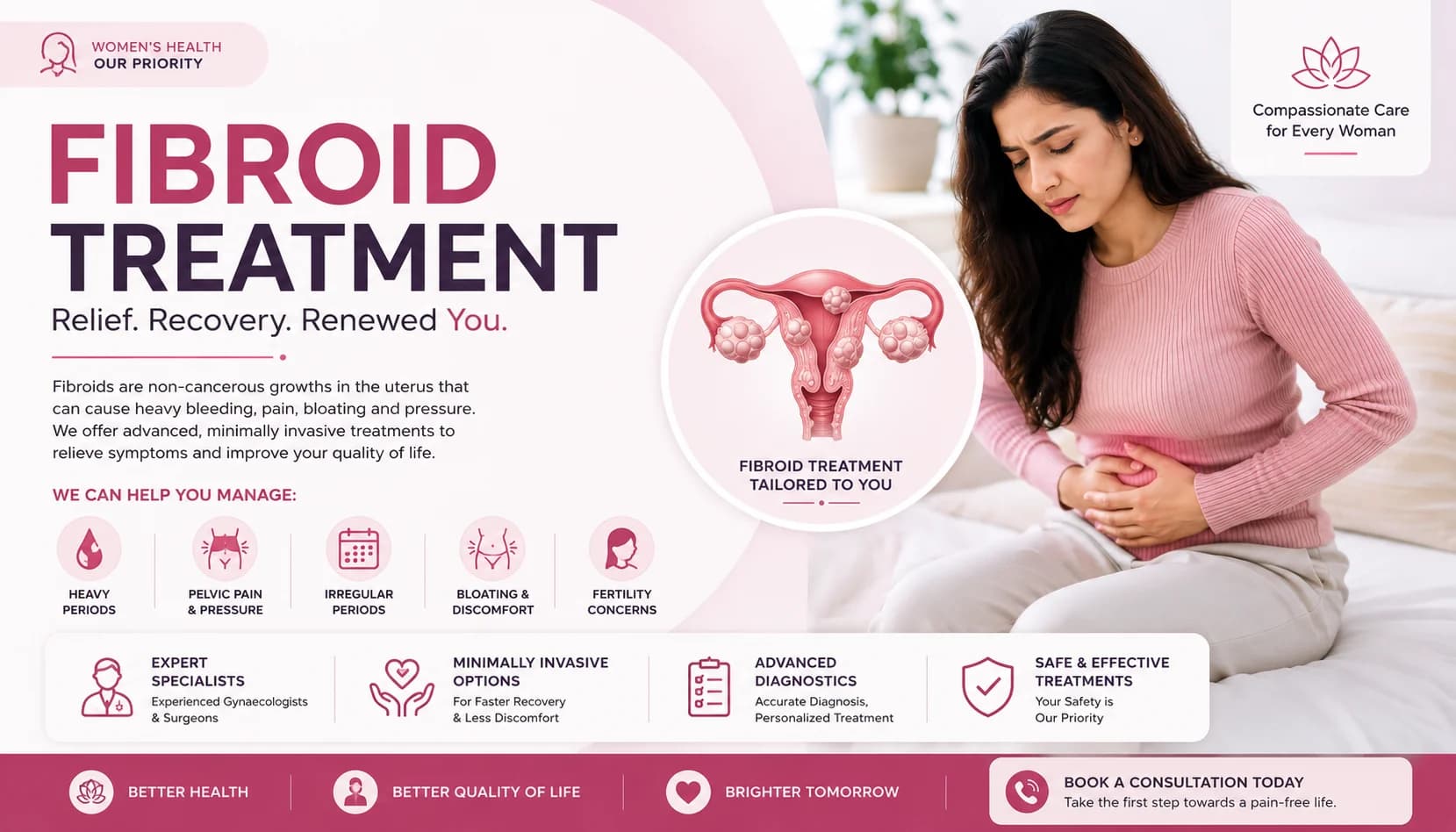
Common symptoms - when to see a specialist
- Heavy periods soaking through pads or requiring hourly changes
- Periods lasting more than 7 days
- Pelvic pressure or a sense of heaviness in the lower abdomen
- Frequent urination or difficulty emptying the bladder
- Pain or discomfort during intercourse
- Unexplained lower back pain
- Difficulty getting pregnant or recurrent miscarriages
- Abdominal swelling or visible enlargement
What Are Uterine Fibroids?
Uterine fibroids (also called myomas or leiomyomas) are non-cancerous growths that develop in or around the uterus from smooth muscle tissue. They are extremely common - up to 70–80% of women will develop fibroids by the age of 50, though many will never know because fibroids often cause no symptoms. When symptoms do appear, they can significantly affect quality of life, fertility, and pregnancy outcomes. Dr. Avani Reddy has extensive experience managing the full spectrum of fibroid presentations - from incidental findings on ultrasound to large, symptomatic fibroids requiring surgical intervention - at her locations in Kokapet and Gachibowli, Hyderabad.
- Submucosal fibroids - grow inside the uterine cavity; most likely to affect periods and fertility
- Intramural fibroids - grow within the uterine wall; the most common type
- Subserosal fibroids - grow on the outer wall of the uterus; can become large without causing period changes
- Pedunculated fibroids - attached by a stalk to the uterus; can twist and cause acute pain
Symptoms of Uterine Fibroids
Not every fibroid causes symptoms. Many women in Hyderabad discover fibroids incidentally during a routine pregnancy scan or gynaecology check-up. When symptoms do occur, they vary based on the size, number, and position of the fibroids. If you are experiencing any of the following, a gynaecology consultation with Dr. Avani Reddy in Kokapet or Gachibowli can help clarify whether fibroids are the cause.
- Heavy menstrual bleeding (soaking through pads in under an hour)
- Prolonged periods lasting more than 7 days
- Pelvic pressure or a feeling of fullness in the lower abdomen
- Frequent urination caused by a fibroid pressing on the bladder
- Difficulty emptying the bowel (constipation)
- Pain during intercourse
- Lower back pain
- Difficulty getting pregnant or repeated miscarriages
- Abdominal bloating or visibly enlarged abdomen
Fibroid Diagnosis in Hyderabad
At Dr. Avani Reddy's clinic in Kokapet and Gachibowli, fibroid diagnosis begins with a pelvic examination and is confirmed with imaging. Transvaginal ultrasound is the first-line investigation - it can identify the number, size, and position of fibroids with high accuracy. In complex cases, or when planning surgery, an MRI of the pelvis provides a detailed map of fibroid anatomy. Blood tests (full blood count, iron studies) are ordered when heavy bleeding has caused anaemia. Hysteroscopy may be recommended when submucosal fibroids are suspected or when infertility evaluation is being performed.
Fibroid Treatment Options - Not Every Fibroid Needs Surgery
One of the most important things Dr. Avani Reddy tells her patients in Kokapet, Gachibowli, and across Hyderabad is this: a fibroid on a scan is not automatically a reason for surgery. Treatment decisions are based on symptoms, fibroid size and position, your age, and whether you are planning a pregnancy. Many women with fibroids do not need any immediate intervention.
- Watchful waiting - small, asymptomatic fibroids monitored with 6-monthly ultrasound; no treatment needed
- Medical management - hormonal medications (GnRH analogues, progestins, tranexamic acid) to control heavy bleeding and temporarily shrink fibroids; suitable when surgery is to be postponed
- Levonorgestrel-releasing IUD - effective for heavy bleeding when submucosal fibroids are not obstructing the cavity
- Laparoscopic myomectomy - keyhole removal of fibroids while preserving the uterus; gold standard for women who want to retain fertility
- Hysteroscopic myomectomy - removal of submucosal fibroids via the vagina and cervix; no abdominal cuts; rapid recovery
- Laparotomy myomectomy - open surgery for very large or numerous fibroids where laparoscopic approach is not suitable
- Hysterectomy - definitive cure; considered only for women who have completed their family and have failed other treatments
Laparoscopic Myomectomy in Hyderabad - What to Expect
Laparoscopic (keyhole) myomectomy is the preferred surgical approach for most women with symptomatic fibroids who wish to preserve their uterus. Dr. Avani Reddy performs laparoscopic myomectomy in Hyderabad with three to four small incisions in the abdomen. A camera and specialised instruments are inserted to locate and remove the fibroids. The uterus is then carefully repaired. Compared to open surgery, laparoscopic myomectomy means less pain, shorter hospital stay (typically 1–2 nights), faster return to normal activity (2–3 weeks versus 4–6 weeks for open surgery), and minimal scarring. Fibroids can recur after myomectomy, particularly if numerous fibroids were removed or if the woman is pre-menopausal at the time of surgery.
Fibroids and Fertility in Hyderabad
Fibroids can affect fertility and pregnancy outcomes depending on their size and location. Submucosal fibroids that distort the uterine cavity are the most likely to impair implantation and increase miscarriage risk. For women undergoing IVF or IUI treatment in Hyderabad, Dr. Avani Reddy evaluates each fibroid individually and advises on whether removal before assisted reproduction is likely to improve outcomes. Large intramural fibroids (greater than 5–6 cm) may also affect fertility. Not all fibroids affect fertility - many women with fibroids conceive without difficulty and carry healthy pregnancies to term.
Fibroid Care at Kokapet and Gachibowli
Dr. Avani Reddy sees fibroid patients at Jade Clinics, Kokapet (serving Kokapet, Narsingi, Gandipet, Financial District, Manikonda, Puppalaguda, and Nanakramguda) and at Ankura Hospital, Gachibowli (serving Gachibowli, Kondapur, Hitech City, Banjara Hills, and Jubilee Hills). Both locations offer ultrasound-guided evaluation and consultation. Surgical procedures are performed at the hospital facility. Evening and weekend appointments are available seven days a week from 10 AM to 8 PM.
Treatment process
- 1Initial consultation - symptom review, examination, and ultrasound assessment
- 2Anaemia correction if heavy bleeding has caused low haemoglobin
- 3Medical therapy to control symptoms and shrink fibroids if surgery is to be delayed
- 4Surgical planning - laparoscopic, hysteroscopic, or open myomectomy based on fibroid type and patient goals
- 5Fertility-focused post-surgery plan if pregnancy is planned within 12 months
- 6Follow-up ultrasound at 3 and 12 months post-treatment
Why choose Dr. Avani Reddy in Hyderabad?
- Obstetrician, gynecologist & fertility doctor with 10+ years of experience
- MS OBG qualification with additional Diploma in Assisted Reproductive Technology
- Fertility-sparing approach - uterus preservation wherever clinically appropriate
- Locations in Kokapet and Gachibowli - accessible from across west and central Hyderabad
- Integrates fibroid care with fertility planning when pregnancy is the goal
- Plain-language explanations - no unnecessary surgery recommended without clear indication
- Open Monday to Sunday, 10 AM to 8 PM, for working patients
Frequently asked questions
Who is the best fibroid specialist in Hyderabad?+
Dr. Avani Reddy is an obstetrician, gynecologist, and fertility doctor in Hyderabad with 10+ years of experience and expertise in uterine fibroid evaluation and treatment, including laparoscopic myomectomy. She consults at Jade Clinics in Kokapet and Ankura Hospital in Gachibowli.
Does every fibroid need surgery?+
No. Many fibroids cause no symptoms and require only monitoring with periodic ultrasound. Surgery is recommended when fibroids cause heavy bleeding, anaemia, significant pelvic symptoms, or are affecting fertility. Dr. Avani Reddy follows a conservative, symptom-guided approach.
What is the difference between myomectomy and hysterectomy for fibroids?+
Myomectomy removes fibroids while keeping the uterus intact, making it suitable for women who wish to preserve fertility or their uterus. Hysterectomy removes the entire uterus and is a permanent solution considered only when other treatments have failed and the patient has completed her family.
Can fibroids come back after surgery?+
Yes. Fibroids can recur after myomectomy, particularly in women who are pre-menopausal at the time of surgery. Studies show recurrence rates of 20–30% within 5 years. Regular follow-up ultrasound is recommended. After menopause, fibroid recurrence is very unlikely.
How long is recovery after laparoscopic fibroid removal in Hyderabad?+
Most women return home within 1–2 days after laparoscopic myomectomy and resume light activities within 1–2 weeks. Full recovery, including return to exercise and physical work, typically takes 3–4 weeks. This is significantly faster than open surgery, which requires 4–6 weeks.
Can I get pregnant after fibroid surgery?+
Yes. Most women can conceive after laparoscopic myomectomy. Dr. Avani Reddy advises waiting 3–6 months after surgery before attempting pregnancy to allow the uterus to heal. The timing of conception after surgery depends on the number and size of fibroids removed and the depth of the uterine repair.
Do fibroids affect IVF success rates?+
Submucosal fibroids that distort the uterine cavity are associated with lower IVF success rates and may be removed before starting an IVF cycle. Intramural and subserosal fibroids that do not affect the uterine cavity have a less clear effect on IVF outcomes and are assessed individually.
What are the fibroid treatment costs in Hyderabad?+
Fibroid treatment costs in Hyderabad vary based on the treatment type - medical management is significantly less expensive than surgery. Laparoscopic myomectomy costs vary by hospital, number of fibroids, and surgical complexity. Many insurance plans cover medically indicated fibroid surgery. Please contact Dr. Avani Reddy's clinic at 83095 78197 for specific information.
Where can I find a fibroid specialist near Kokapet or Gachibowli?+
Dr. Avani Reddy consults at Jade Clinics, Kokapet (serving Narsingi, Gandipet, Financial District, Manikonda, Puppalaguda) and Ankura Hospital, Gachibowli (serving Kondapur, Hitech City, Banjara Hills). Appointments are available Monday to Sunday, 10 AM to 8 PM.
Can fibroids cause miscarriage?+
Submucosal fibroids, which grow inside the uterine cavity, are associated with an increased risk of miscarriage. They can interfere with implantation and blood supply to a developing pregnancy. Removing these fibroids before conception may reduce miscarriage risk. Other types of fibroids have a less clear relationship with miscarriage.
Where can I get fibroid treatment in Hyderabad?+
Dr. Avani Reddy is an obstetrician, gynecologist, and fertility doctor with 10+ years of experience (MBBS · MS OBG · Fellowship Reproductive Medicine · Diploma in ART), practising at Jade Clinics, Kokapet and Ankura Hospital, Gachibowli. Book at 83095 78197 or online via TDAppointments.
Is fibroid treatment available near Kokapet and Gachibowli?+
Yes. Consultations are available at Jade Clinics, Kokapet and Ankura Hospital, Gachibowli, with patients travelling from Financial District, Kondapur, Hitech City, Narsingi, Manikonda, and across Hyderabad.
Who is a good obstetrician gynecologist for fibroid treatment in Hyderabad?+
Dr. Avani Reddy is an obstetrician, gynecologist, and fertility doctor with 10+ years of experience (MBBS · MS OBG · Fellowship Reproductive Medicine · Diploma in ART), practising at Jade Clinics, Kokapet and Ankura Hospital, Gachibowli. She focuses on fibroid treatment with personalised plans and transparent next steps.
Related treatments
Serving all of Hyderabad
Dr. Avani Reddy provides uterine fibroid treatment in hyderabad for patients across Hyderabad - including Kokapet, Gachibowli, Financial District, Narsingi, Manikonda, Gandipet, Nanakramguda, Puppalaguda, Khajaguda, HiTech City, Kondapur, Madhapur, Banjara Hills, Jubilee Hills, Miyapur, Hitech City. Locations at Jade Clinics, Kokapet and Ankura Hospital, Gachibowli.
Last updated: July 2025. Written by Dr. Avani Reddy, MBBS, MS OBG - obstetrician, gynecologist and fertility doctor with 10+ years experience.